
Image Commenting
ContentPaul provides a powerful and intuitive system for commenting on images, enhancing collaboration and ensuring detailed feedback. This guide covers all aspects of image commenting, including marking specific areas, mentioning other users, receiving notifications, using direct links to comments, resolving comments, and distinguishing between team and public comments.
Commenting on Images
Marking Specific Areas
- Open the Image: Navigate to the content item and select the image you want to comment on.
- Comment Mode: Your pointer will change into a red circle with a white "+" in it.
- Select an Area: Click to highlight the specific area of the image you want to comment on.
- Add Your Comment: Once clicked, a comment box will appear. Type your comment and click submit. The marked area will be highlighted with the avatar of the user that commented, indicating that it has a comment.
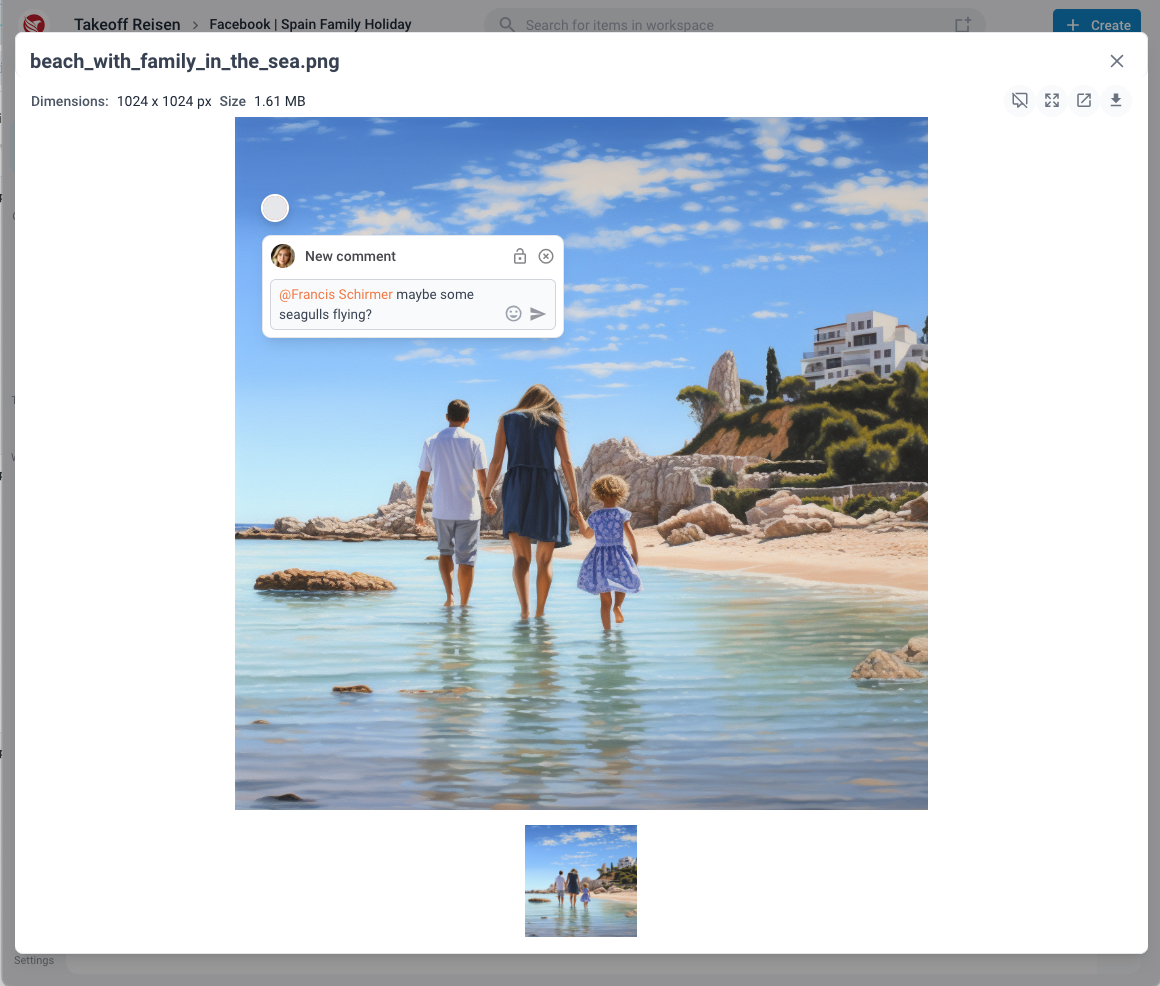
Mentioning Other Users
- Type “@” and Username: In the comment box, type the “@” symbol followed by the username of the person you want to mention.
- Select User: A list of matching usernames will appear. Select the appropriate user from the list.
- Complete the Comment: Finish typing your message and submit the comment. Mentioned users will be notified and can easily access the comment.
Notifications and Direct Links
Notifications
- Receive Notification: When you are mentioned in a comment or a new comment is added to an image you’re following, you will receive a notification.
- Access Notifications: Notifications can be accessed from your inbox within ContentPaul or via email if email notifications are enabled in your settings.
Direct Links
- Direct Link in Notification: Notifications include a direct link to the specific comment on the image.
- Click the Link: Clicking the direct link will take you directly to the image and highlight the commented area, allowing you to see the feedback in context.
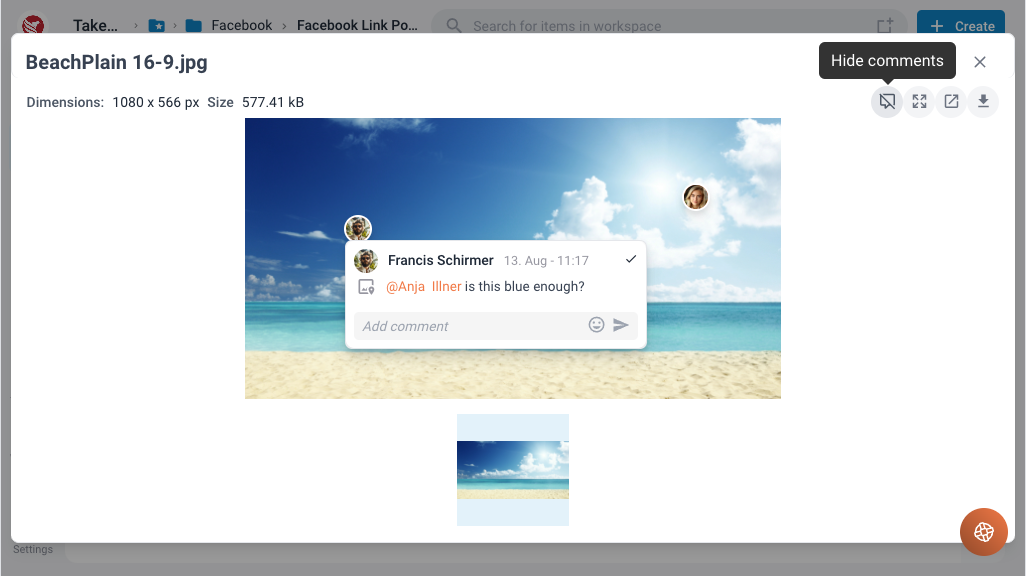
Show/Hide Comments
If your image becomes too cluttered with comments and you want to see the full picture, you can easily manage comment visibility. Click the hide/show comments button to toggle the visibility of comments on or off. This allows you to view the image without any distractions.
Resolving Comments
- Identify Comments to Resolve: Review comments on the image and identify those that have been addressed.
- Mark as Resolved: Click on the comment to open the options menu and select “Resolve.” The comment will be marked as resolved, indicating that the issue has been addressed.
- Review Resolved Comments: Resolved comments can be reviewed at any time, providing a history of feedback and resolutions.
Team and Public Comments
Team Comments
- Internal Collaboration: Use team comments to communicate with your internal team members.
- Visibility: Team comments are visible only to team members and exclude external stakeholders or clients.
- Usage: This feature is useful for internal feedback, discussions, and instructions that should remain within the project team.
Public Comments
- External Feedback: Use public comments to communicate with both internal team members and external stakeholders or clients.
- Visibility: Public comments are visible to everyone with access to the content item, including external parties.
- Usage: This feature is ideal for feedback and discussions that involve clients or stakeholders, ensuring transparency and inclusion.
Benefits of Image Commenting in ContentPaul
- Precision Feedback: Marking specific areas of an image allows for detailed and precise feedback, ensuring clarity.
- Enhanced Collaboration: Mentioning users and using direct links in notifications fosters prompt and effective communication.
- Efficient Workflow: Resolving comments keeps the workflow organized and ensures that all feedback is addressed.
- Targeted Communication: Differentiating between team and public comments ensures that feedback is directed to the appropriate audience.
Commenting on images in ContentPaul is a comprehensive feature designed to enhance collaboration and ensure detailed feedback. By utilizing tools such as marking specific areas, mentioning users, direct notifications, comment resolution, and visibility settings, users can effectively manage feedback and streamline their workflows.